
This article is published as part of a partnership.
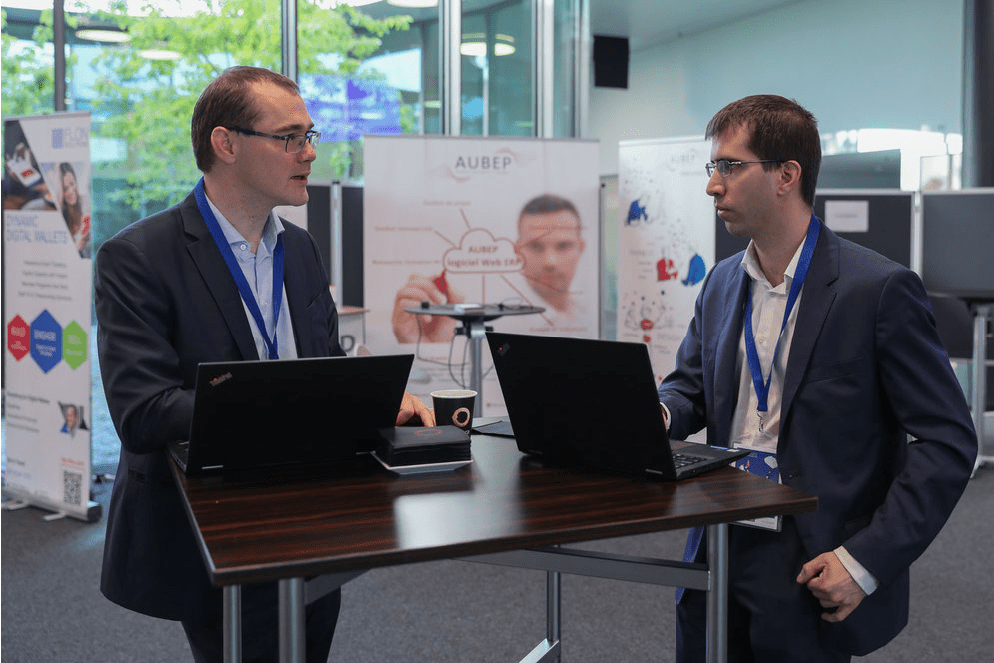
For its first DevStudio Challenge, Logitech opened access to its development tools and invited software developers from around the world to build new applications for some of their most innovative devices. The initiative attracted more than 1,500 participants from over 20 countries and offered a glimpse into how the company approaches open innovation. Two EPFL alumni, Mathieu Meisser and Jean-Michel Chardon, were among the Logitech leaders behind the programme.
From its origins to its continued presence at the EPFL Innovation Park, Logitech and EPFL have long shared a common history. Founded in 1981 by EPFL alumnus Daniel Borel and his co-founders, the company has grown into a global technology leader. Many EPFL graduates have gone on to work at Logitech, contributing to product development, engineering and innovation across the company.
This year, Logitech highlighted a different aspect of innovation through its first-ever DevStudio Challenge, an open innovation programme designed to explore how external developers could expand the capabilities of the company's devices. As hardware increasingly relies on software ecosystems and third-party integrations, Logitech chose to open access to its software development kits (SDKs) and invite developers around the world to experiment with new applications and workflows.
"We were really interested to see the breadth of ideas that could come up when we open up access to our devices," says Mathieu Meisser, Senior Product Manager for the MX Series at Logitech and an EPFL alumnus in microengineering. "We pretty quickly knew that we wouldn't be able to think of all the different ways that people use our devices, so it became evident we wanted to open it up to anyone to play with that."
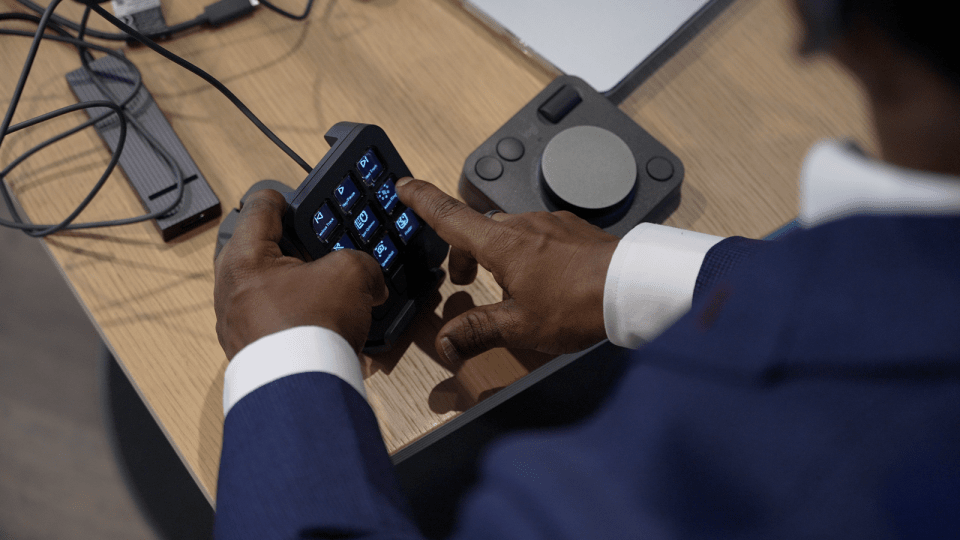
Launched in partnership with Devpost, the global developer community platform, the challenge focused on two Logitech technologies: the Action Plugin SDK associated with the MX Creative Console and MX Ink, the company's mixed reality stylus for Meta Quest.
For the first time, Logitech invited developers to build applications using these technologies and to address practical problems through software. The response exceeded expectations. "We were surprised by the amount of people that registered to the challenge," says Meisser. "And these came from more than 20 different countries from all over the world. And what surprised us as well is the fact that we saw a good mix of professional companies as well as individual developers proposing ideas and projects."
For Jean-Michel Chardon, Head of Technology Office at Logitech and also an EPFL alumnus, the challenge revealed both the scale and diversity of the community interested in building on Logitech's platforms. "We were impressed by the quantity and quality of the projects submitted," he says. "It was difficult to select 6 finalists from the 298 submissions from 1500+ participants. We were also surprised by the geographical diversity of participants with a majority from India but as far as Australia, Turkey, USA, North Macedonia, etc."
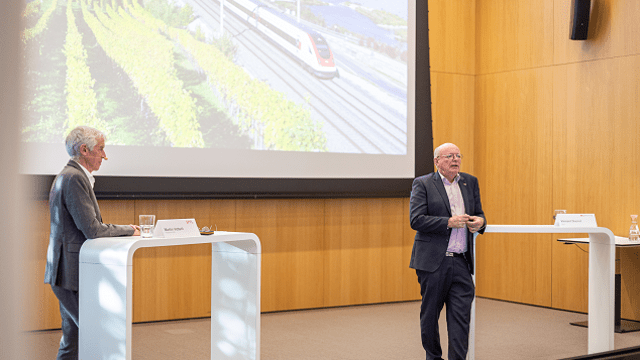
Following several rounds of evaluation, six finalist teams were invited to Logitech's offices at EPFL to present their projects to company leaders and experts. During their stay, they also visited Logitech's R&D facilities and EPFL's Bolo Museum, made of older IT devices.
Two projects ultimately received the top awards.
The winner in the Action SDK category was AccessRing, developed by Abishek Muthian and Shilpi Bhattacharya from India. Inspired by Bhattacharya's experience living with GNE Myopathy, a progressive neuromuscular disease, the project addresses a challenge faced by many people with motor impairments: interacting precisely with graphical interfaces. Rather than requiring users to target small buttons and controls with a mouse, AccessRing identifies actions located near the cursor and makes them accessible directly through Logitech hardware.
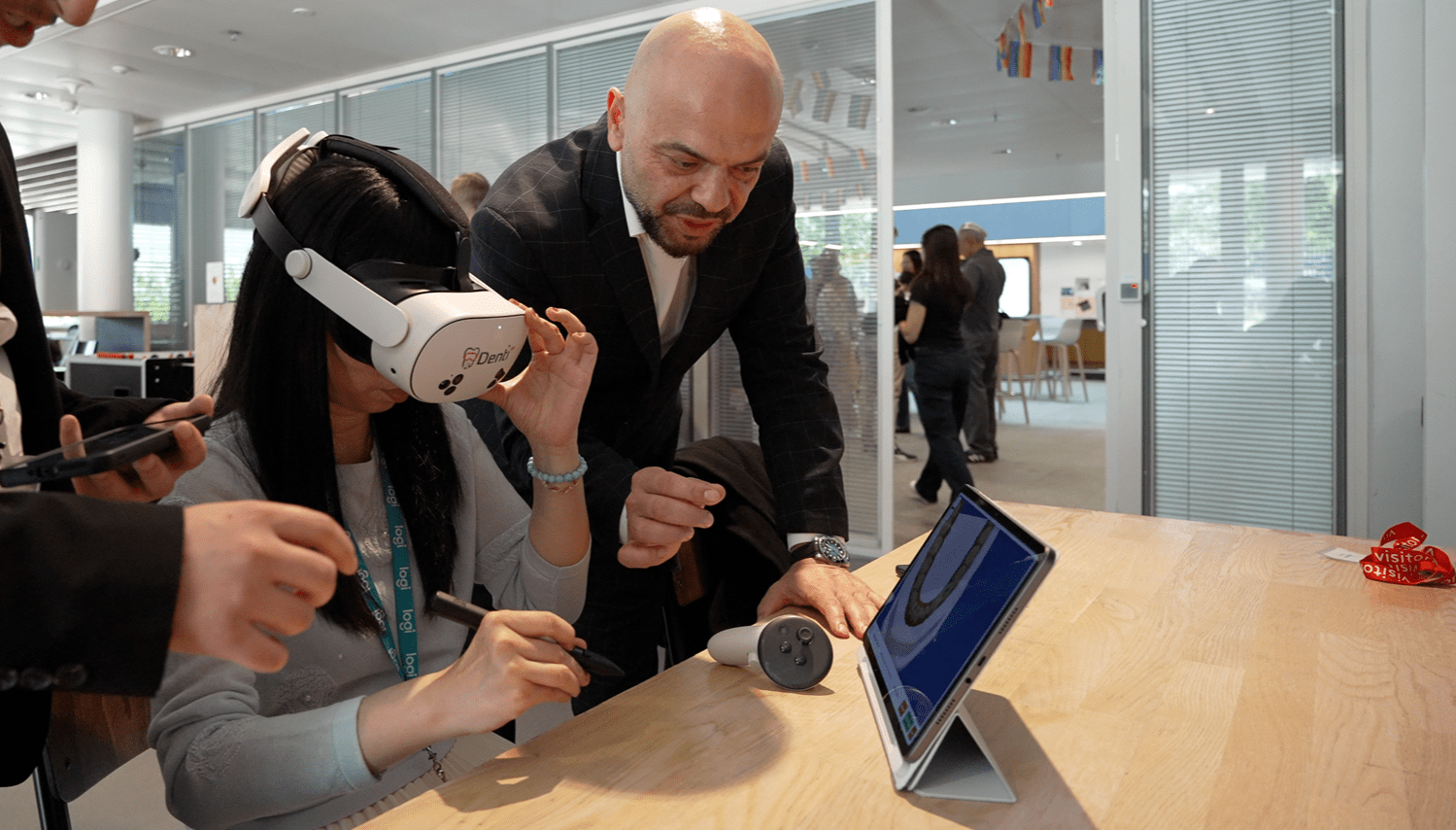
In the MX Ink category, the winning project was DentiXR, created by Nikola Rendevski, Naile Emini, Elena Gjorgovska and Konstantin Veljanovski from North Macedonia. Using Logitech's mixed reality stylus, the team developed a dental training simulator that allows students to practise procedures in an immersive virtual environment. The application offers a way to repeat training exercises without the limitations and costs associated with physical simulators.
For Logitech, the challenge was also an opportunity to test a broader approach to product innovation. "Logitech innovates in new interaction solutions such as MX Ink precision stylus for virtual reality and MX Creative Consoles to enable or streamline new workflows," explains Chardon.
By opening these tools to external developers, the company gains access to a wider range of ideas and use cases than it could generate internally. As Meisser puts it, "It's all about opening up to a broader set of usecases and ways of using our devices. Even more so, today almost everybody can become a developer and create its own integration with your devices."
The two winning teams each received a USD 10,000 prize and will have the opportunity to make their projects available through Logitech's ecosystem. Several applications developed during the challenge are expected to appear on the Logi Marketplace in the coming months.
For Logitech, the first edition of DevStudio demonstrated what can happen when a company opens its technology to external contributors, illustrating how new ideas often emerge from users and developers working far beyond a company's own walls. And for the EPFL community, it offered another example of alumni helping shape new approaches to innovation in industry.

Comments0
Please log in to see or add a comment
Suggested Articles