
Professional situation
Professional aspiration
Summary
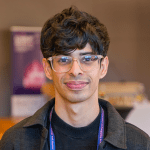
https://saransh-cpp.github.io is much more updated at all times! I am a master’s (computational science and engineering) student at EPFL (École Polytechnique Fédérale de Lausanne / Swiss Federal Technology Institute of Lausanne). At the moment, I am interning with the Cognitive AI team at Logitech, Switzerland.
Before joining EPFL, I was a research software engineer at UCL’s Advanced Research Computing Centre, where I worked on HPC and DevOps projects. Even before UCL, I worked as a research software engineer at CERN (under the Princeton Institute for Computational Science and Engineering), writing software for computational high-energy physics. I hold an undergraduate degree in computer science and mathematics from the University of Delhi. Besides writing code, I am also quite fond of teaching courses and workshops, broadly on scientific and high-performance computing, software engineering, and numerical mathematics (/teaching).
Apart from the experiences above, I have also dabbled with functional programming and type theory, more computational high-energy physics and numerical mathematics, applied machine learning (for science and social good), technical writing for ML frameworks, and mathematical modeling of batteries (/experiences). Moreover, I develop and maintain different parts (infrastructure, developer tooling, code, docs, …) of several open-source scientific software (/opensource).
I am specifically interested in Computational Mathematics (Numerical Methods, Type and Proof Theory, Automatic Differentiation), Scientific Computing (High-Performance Computing, Data-Intensive Computational Methods, DevOps), and Applied Machine Learning (for Science, social good, and more). I advocate for and am extremely passionate about open-source and open-science.
Professional experiences
Ai engineering intern
Logitech , Lausanne - Temporary contract
From February 2026 to Today

Research software engineer
UCL , London - Permanent contract
From June 2025 to September 2025

“Generalist” staff member in the Research Software Engineering group of the Advanced Research Computing Centre. Mostly involved with the HPC, DevOps, and Education sub-groups, open-source research theme, and Python tooling.
Technical work (HPC + DevOps):
◦ Added GPU and auto-differentiation support to large-scale cosmological simulations (GLASS) for ESA's Euclid space mission (GPU embedded Computational Science and Engineering grant by EPCC + Euclid space mission grant by the UKSA).
◦ Involved with porting UCL's XNAT service from VMs to an in-house kubernetes-based cloud infrastructure.
◦ Audited sustainability and user-behavior of UK's national tier 2 high performance computing cluster (Young).
Educational work:
◦ Lead instructor/tutor for several Software Carpentry workshops at UCL.
◦ Lead instructor/tutor for several sessions at UCL's Research Software Engineering Summer School.
◦ Tutor for the graduate-level "Research Software Engineering with Python" course.
◦ Led the development of the curriculum and pyodide/jekyll infrastructure for the first-ever “Research Software Engineering Summer School.”
◦ Led the development of the Green HPC course for UCL's HPC cluster.
◦ Developed contents and pyodide/jekyll infrastructure for the graduate-level “Research Software Engineering with Python” course.
Community work:
◦ Lead/co organiser for a few events - ARC ❤ Google Summer of Code, GNU/Linux install party, …
◦ Lead organiser of the TechSocial series (UCL-wide Research Programming Technical Social series).
◦ Co-organiser of “Healing Through Collaboration: Open-Source Software in Surgical, Biomedical and AI Technologies” workshop under the Hamlyn Symposium on Medical Robotics 2025 at the Royal Geographical Society, Imperial College London.
Assistant research software engineer
UCL , London - Permanent contract
From August 2024 to June 2025
Same as above, but with less degree of independence/leadership/ownership.
Research software engineer
CERN , Meyrin - Temporary contract
From January 2024 to August 2024
◦ Worked with the Princeton Institute for Computational Science and Engineering (Princeton Research Computing Group).
◦ Extended auto-differentiation support for high-energy physics libraries operating on ragged and JSON-like data.
◦ Added symbolic computing support and migrated the vector manipulation backend of Fermilab's analysis framework.
◦ Implemented a non-uniform rebinning algorithm and CUDA support for high-energy physics histograms in Python.
Visiting student researcher (mitacs globalink research intern)
MCMASTER UNIVERSITY , Hamilton, ontario - Temporary contract
From June 2023 to August 2023
◦ Worked with functional programming, type theory, and logic to add proofs and algorithms for data containers and mathematical operations in Agda’s standard library.
◦ Significantly reduced library’s compile time by refactoring the existing API and simplifying the dependency graph.
Iris-hep research fellow
PRINCETON UNIVERSITY - Temporary contract
From June 2022 to September 2022

◦ Co-authored a Python-based Lorentz vector manipulation library with support for ragged data and JIT compilation.
◦ Worked on Scientific Python’s developer guides and tools, and fixed bugs in the Scikit-HEP ecosystem
Technical writer
FluxML
From May 2022 to October 2022

Funded by the Julia programming language.
Open-source developer (google summer of code)
NumFOCUS
From May 2021 to August 2021

◦ Built an automated Twitter Bot capable of automatically constructing random Mathematical Simulations of Batteries. ◦ Implemented user-facing APIs in PyBaMM, fixed critical bugs (in PyBaMM and upstream packages), and reduced the CI time by ∼30 minutes.
Additional trainings
University of Delhi
Bachelor of Technology - Information Technology and Mathematics
2020 to 2024
Grade: 9.505/10
Department rank: 2/59
Entrance examination (DUET) 2020 All India Rank: 42/~10,000 (selected in a cohort of 59 students)
Thesis at CERN: Computational upgrades to the high energy physics analysis pipeline for future LHC/HL-LHC runs.
Notable projects:
◦ Semester project: A Synergic Deep Learning Approach for Glioma Grading from Brain Tumor MRI Images.
◦ Computational Social Systems course project: A Novel Model to Monitor and Measure Political and Governance Bias of News Channel’s Content on YouTube: Experimental Insights and Reflections.
Lead Organizer of Convoke 5.0 (annual TechFest) and HashHacks (24-hour-long hackathon) (managed 30+ volunteers and 300+ attendees).
Involved in several official teaching and mentoring workshops organised by CIC, including conducting yearly and one-time workshops. Some of the reports for these workshops are available on CIC’s website and some of them were lost with time.
ETH Zurich
Swiss National Supercomputing Centre Summer University - Effective High-Performance Computing and Data Analytics
2025 to 2025
Coursework: GPU architectures, GPU programming (CUDA), Programming model, Memory management, Performance optimization and scientific libraries, GPU-Accelerated Computing with Python, NumPy-like libraries for both CPUs and GPUS computing, Just-in-time compilation from Python code, Distributed workloads on HPC clusters.
Associations
Academic background
Languages
Hindî - Native language
Anglais - Fluent
Français - Basics
Ourdou - Fluent
Panjâbî - Fluent
 linkedin
 website
 github